
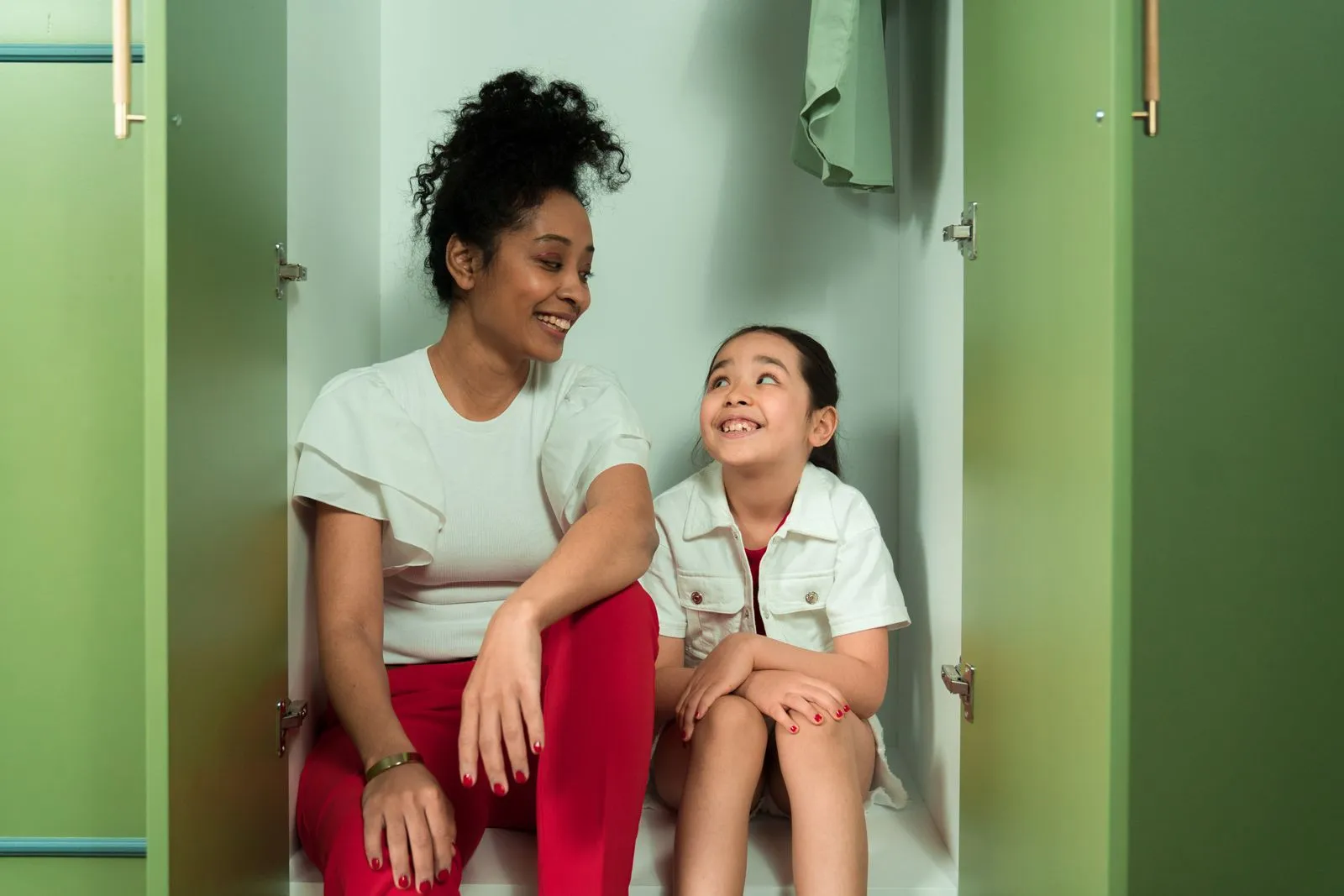
A small closet can still hold everyday clothes, shoes, and accessories if each part has a clear job. The key is to plan around your child’s height, the clothes they wear most, and the space the door needs to open. Start by measuring the closet and removing items that no longer fit or belong elsewhere. Then divide the remaining space into simple zones so your child can find and put away belongings with less help.
Make Hanging Space Flexible
Use hanging space for clothes that crease easily or are part of a regular outfit rotation. A second, lower rod can double the capacity for shorter items such as shirts, skirts, and jackets, while the upper rod holds longer pieces. Check the length of your child’s clothes before setting rod heights, and leave enough room below each rod for a basket or shoes if needed.
Keep frequently worn clothes within your child’s reach. Group similar items together, such as school clothes, play clothes, and special outfits, so choosing an outfit is easier. If the closet is narrow, use slim hangers and leave a little space between groups; packed rods make clothes harder to see and return to their place.
Set Shelves at Child Height
Shelves work well for folded clothes, bags, hats, and labeled bins. Place everyday items on lower shelves, reserving higher shelves for seasonal clothing or belongings an adult manages. Avoid deep stacks that hide items at the back. Shallow shelves or small, clearly labeled containers help keep the contents visible and make it easier to put things away.
Adjust shelf spacing to fit what you store rather than leaving large unused gaps. A shelf for folded sweaters needs more clearance than one for small accessories. If fixed shelves cannot move, use sturdy bins to divide a tall opening into manageable sections, making sure containers are easy to pull out without tipping.
Use Drawers for Small Items
Drawers keep socks, underwear, pajamas, and other small items contained. If the closet has no built-in drawers, consider a compact drawer unit that fits without blocking hanging clothes or the doorway. Measure the closet depth and width first, and check that drawers can open fully while the room door and closet door are in use.
Keep drawer organization simple enough to maintain. Use dividers for small categories, or assign each drawer one purpose. Put daily essentials in the easiest-to-reach drawer and less-used items higher or lower. For young children, choose smooth-running drawers and secure freestanding units to the wall according to the manufacturer’s instructions.
Put Closet Doors to Work
The inside of a closet door can hold lightweight accessories, such as hair items, belts, or small bags, using an over-door organizer or mounted hooks. Before adding anything, check the door’s clearance and hinge position. The organizer should not hit shelves, catch clothing, or prevent the door from closing fully.
Treat door storage as a small extra zone, not a place for heavy or bulky belongings. Keep sharp, breakable, and adult-use items out of a child’s reach, and avoid overloading hooks. If the closet door swings into a tight area, a slim organizer or a few well-placed hooks may work better than a deep rack.
A useful children’s closet combines reachable hanging space, shelves that fit real belongings, drawers for small essentials, and door storage that does not obstruct the room. Make one change at a time, then see what your child can use independently. Little Room Studio can help plan a closet around your room’s dimensions and daily routines.